


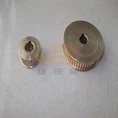
In modern industrial production, industrial belts, as an important transmission component, play an indispensable role.
Industrial belts mainly rely on friction to transmit power. In a belt drive system, it is usually composed of a driving wheel, a driven wheel and an endless belt. The driving wheel is driven by the power source to start rotating. Because its surface is in close contact with the inner side of the belt, friction is generated between the belt and the driving wheel. Under the action of friction, the belt begins to move with the rotation of the driving wheel.
During the movement of the belt, the power is transmitted to the driven wheel. There is also friction between the outer surface of the driven wheel and the outer side of the belt, and the movement of the belt drives the driven wheel to rotate. In this way, the power transmission from the driving wheel to the driven wheel is realized. This transmission method relying on friction has many advantages. On the one hand, it can adapt to different speed requirements. By adjusting the diameter ratio of the driving wheel and the driven wheel, different speed transmission can be achieved to meet the diverse speed requirements of various industrial equipment. On the other hand, belt transmission has the function of buffering and shock absorption. In the process of industrial production, the equipment may encounter different degrees of impact and vibration. The flexibility of the belt can absorb this energy and protect the equipment from damage.
In addition, industrial belts also have good adaptability. They can adapt to different working environments and can work normally in high temperature, high humidity or dusty environments. At the same time, the installation and maintenance of industrial belts are relatively simple, and do not require complex equipment and superb technology, which also makes it widely used in the industrial field.
In short, industrial belts achieve power transmission through friction, have strong adaptability and easy maintenance, and are a reliable and important transmission option in modern industrial production.