


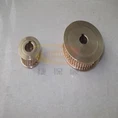

Basic Info.
| Model NO. | T10-500 225L T10-630 |
| Materia | Rubber |
| Inside Material | Glass Fiber |
| Feature | Oil-Resistant, Acid And Alkali Resistant, Tear-Resistant, Heat-Resistant, Cold-Resistant, Wear-Resistant |
| Tensile Strength | Strong |
| T10 | 630 |
| L | 255 |
| Trademark | JBOSUN |
| Transport Package | Carton |
| Specification | SGS, ROHS |
| Origin | Shenzhen China |
| HS Code | 40103500 |
Product Description
| Timing Belt | ||||
| Type | Pitch | Tooth height | Belt thickness | |
| pb(mm) | ht(mm) | hs(mm) | ||
| T-type | MXL | 2.032 | 0.51 | 1.14 |
| XL | 5.08 | 1.27 | 2.3 | |
| XXL | 3.175 | 0.76 | 1.52 | |
| L | 9.525 | 1.91 | 3.6 | |
| H | 12.7 | 2.29 | 4.3 | |
| XH | 22.225 | 6.35 | 11.2 | |
| XXH | 31.75 | 9.53 | 15.7 | |
| T2.5 | 2.5 | 0.7 | 1.3 | |
| T5 | 5 | 1.2 | 2.2 | |
| T10 | 10 | 2.5 | 4.5 | |
| T20 | 20 | 5 | 8 | |
| AT5 | 5 | 1.2 | 2.7 | |
| AT10 | 10 | 2.5 | 5 | |
| AT20 | 20 | 5 | 8 | |
| Arc toothHTD | 2M | 2 | 0.75 | 1.36 |
| 3M | 3 | 1.22 | 2.4 | |
| 5M | 5 | 2.06 | 3.8 | |
| 8M | 8 | 3.36 | 6 | |
| 14M | 14 | 6.02 | 10 | |
| 20M | 20 | 8.4 | 13.2 | |
| Arc tooth STD | S2M | 2 | 0.76 | 1.36 |
| S3M | 3 | 1.14 | 2.2 | |
| S5M | 5 | 1.91 | 3.4 | |
| S8M | 8 | 3.05 | 5.3 | |
| S14M | 14 | 5.3 | 10.2 | |
| Arc tooth RPP | RPP3M | 3 | 1.15 | 1.9 |
| RPP5M | 5 | 1.95 | 3.5 | |
| RPP8M | 8 | 3.2 | 5.5 | |
| RPP14M | 14 | 6 | 10 | |
Synchronous belt and wheel selection
Synchronous belt drive belongs to belt drive, but it improves the slipping problem of traditional belt drive that cannot maintain a strict transmission ratio. Traditional belt drive relies on the friction generated when the belt and pulley are tensioned to transmit power, but when the driven wheel encounters an obstacle or overload, the belt will slip on the pulley.
The solution to the slipping problem is to learn from chain drive, process teeth on the inner circumference of the belt and the outer circumference of the pulley, and the belt teeth are meshed with the pulley teeth to ensure that there is no relative slip between the belt and the pulley during the transmission process, ensuring a stable and accurate transmission ratio and synchronized speed.
1. Synchronous belt material
Synchronous belts can be divided into two types according to the material: polyurethane (PU) material and rubber material.
Polyurethane synchronous belts are mainly made of thermoplastic polyurethane and have high wear resistance. This type of synchronous belt uses nylon wire or steel wire as the tensile layer, so the synchronous belt is harder and suitable for high-load transmission.
Rubber synchronous belts are mainly made of chloroprene rubber, which has better crack resistance. This type of synchronous belt uses glass fiber as the tensile layer, so rubber synchronous belts are softer and easier to bend than polyurethane synchronous belts.
2. Synchronous belt tooth shape
As for the tooth shape, as long as the teeth of the belt and the pulley can be fully meshed, any shape of teeth can be processed. The difference lies in the load bearing capacity of the teeth and the influence of transmission accuracy. Therefore, the industry currently only uses "trapezoidal teeth" and "arc teeth".
(1) Trapezoidal tooth synchronous belts can transmit large torque (large load) and are suitable for low-precision transmission and low-speed transmission.
(2) Arc tooth synchronous belts have a small polygon effect, provide a smoother transition, reduce vibration and impact, and the belt and pulley are more tightly meshed, so the transmission accuracy is high. It is suitable for transmission systems with small transmission ratios, high speeds, and high precision.
Hot Tags: with coating rubber timing belt, China with coating rubber timing belt manufacturers, suppliers, factory, 8MGT Rubber Timing Belt, MXL Rubber Timing Belt, with Glue Rubber Timing Belt, RPP3M Rubber Timing Belt, T10 Rubber Timing Belt, open end v belt


