


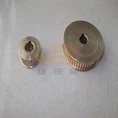

Basic Info.
| Model NO. | XXH |
| Material | Rubber |
| Inside Material | Glass Fiber |
| Feature | Oil-Resistant, Acid And Alkali Resistant, Tear-Resistant, Heat-Resistant, Cold-Resistant, Wear-Resistant |
| Tensile Strength | Strong |
| Usage | Transmission Belt |
| Color | Black |
| Trademark | JBOSUN |
| Transport Package | Carton, Wooden |
| Specification | SGS, ROHS |
| Origin | Shenzhen China |
| HS Code | 84839000 |
Product Description
OEM is offered. And your design is also welcomed.
| Arc Tooth Type | Pitch Pb(mm) |
Tooth height ht(mm) |
Belt thickness hs(mm) |
Width (mm) |
| 2M | 2 | 0.75 | 1.36 | 6 |
| 3M | 3 | 1.17 | 2.4 | 6 |
| 5M | 5 | 2.06 | 3.8 | 9/15 |
| 8M | 8 | 3.36 | 6.00 | 20 |
| 14M | 14 | 6.02 | 10.00 | 40 |
| 20M | 20 | 8.4 | 13.20 | 115/170/230 |
| S2M | 2 | 0.76 | 1.36 | 9 |
| S3M | 3 | 1.14 | 2.20 | 9 |
| S4.5M | 4.5 | 1.71 | 2.81 | 9/15/20/25/30 |
| S5M | 5 | 1.91 | 3.4 | 20/25/30 |
| S8M | 8 | 3.05 | 5.3 | 30/50 |
| S14M | 14 | 5.3 | 10.2 | 55 |
| RP2M | 2 | 0.76 | 1.36 | 10/15/20 |
| RP3M | 3 | 1.15 | 1.9 | 15 |
| RP5M | 5 | 1.95 | 3.5 | details |
| RP8M | 8 | 3.2 | 5.5 | 50/85 |
| RP14M | 14 | 6.00 | 10 | 85/115/175 |
FAQ
1. What are the main materials of rubber industrial belts?
Rubber industrial belts are usually made of natural rubber or synthetic rubber (such as neoprene), with good elasticity and wear resistance, suitable for a variety of industrial transmission applications.
2. How to properly maintain rubber industrial belts?
Avoid long-term direct sunlight to prevent rubber aging; regularly use warm water and neutral detergent to clean, avoid highly corrosive detergents; keep dry and avoid moisture when stored.
3. How long is the service life of rubber industrial belts?
The service life is affected by the use environment, load, tension and maintenance conditions. When cracks, breaks or obvious wear occur, they should be replaced in time.
4. Can rubber industrial belts withstand high temperatures?
The heat resistance temperature of ordinary rubber belts is generally between -30°C and 80°C. If higher heat resistance is required, special materials such as fluororubber can be selected, and the temperature resistance can reach 300°C.
5. What is the difference between rubber industrial belts and polyurethane belts?
Rubber belts are suitable for general transmission and have a wide range of sizes; polyurethane belts are wear-resistant and not prone to rubber powder, suitable for clean environments and high-precision transmission.
6. How to determine whether the rubber industrial belt needs to be replaced?
When cracks, breaks, deformations, slippage or reduced transmission efficiency occur, replacement should be considered to avoid equipment failure.
7. How to adjust the installation tension of the rubber industrial belt?
After installation, it should be tensioned to avoid slipping due to looseness and increasing the mechanical burden due to tightness. The tension needs to be readjusted after the initial operation to ensure stable transmission.
8. Does the rubber industrial belt need lubrication?
It is generally not recommended to apply lubricant on the belt surface to avoid affecting the transmission performance and accelerating aging.
9. Is the rubber industrial belt compatible with products from different manufacturers?
Standard rubber belts are usually compatible with multiple manufacturers, but special models or OEM products need to be purchased according to the original specifications.
10. How to prevent the rubber industrial belt from generating dust?
Rubber belts may generate rubber dust during operation. Protective measures should be taken in clean environments, such as installing protective covers or using polyurethane belts to reduce dust.
Hot Tags: rubber industrial belt, China rubber industrial belt manufacturers, suppliers, factory, Flat Industrial Belt, V ribbed Industrial Belt, Double Toothed Rubber Industrial Synchronous Belt, Coated Rubber Synchronous Belt, V Industrial Belt, Rubber Industrial Belt


